How Schools Can Inspire Social Responsibility in Children?
posted on Dec 30, 2025
Gurukul The School, known as the top school in Ghaziabad, it’s our vision to provide education that fosters children’s personal development and drives massive social change.
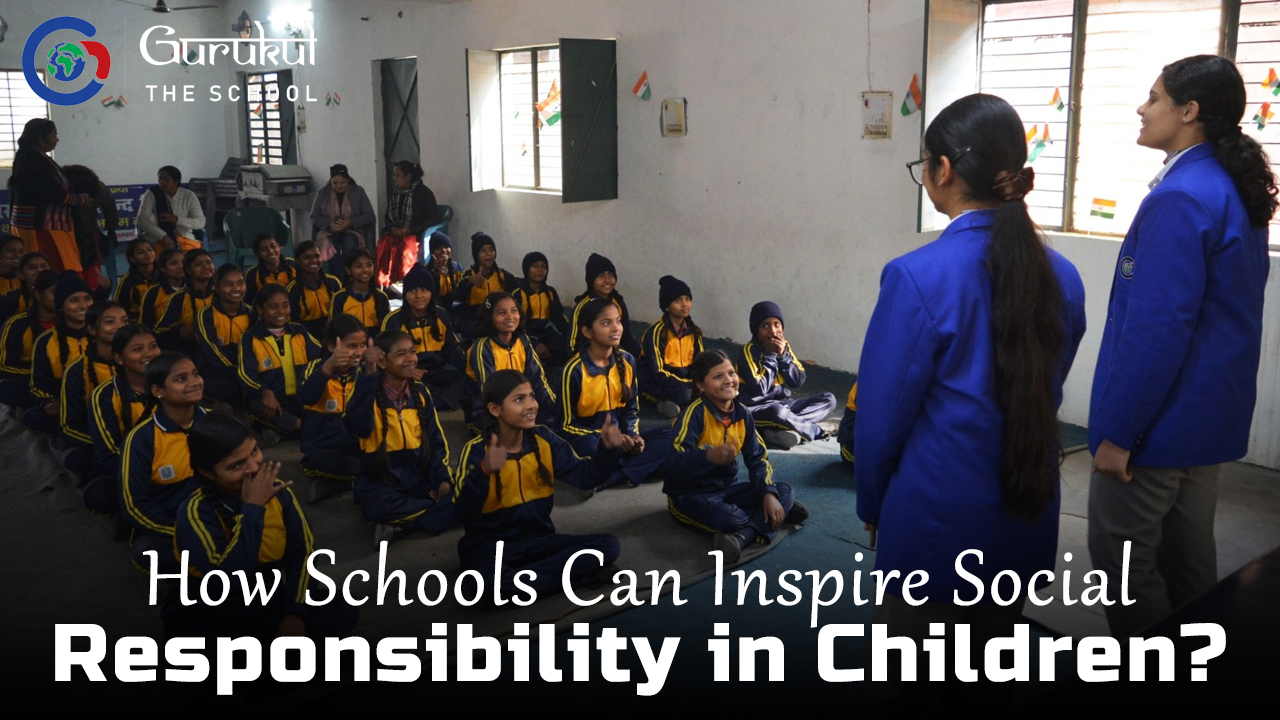
The modern world is witnessing a lot of changes. Right from infrastructural advancements to technological upgrades, there’s a lot that has either already changed or is on the verge of changing. The educational landscape is no exception, too. In fact, if you see, there’s a quiet shift transforming the core values of modern schools.
Previously, schools focused primarily on nurturing students’ academic and intellectual prowess. While it’s still there, schools have now embraced a more holistic approach. Now, most modern schools give equal priority to raising socially responsible citizens who have a better understanding of their role in society and are capable of making age-appropriate contributions to make society a better place. At Gurukul The School, known as the top school in Ghaziabad, it’s our vision to provide education that fosters children’s personal development and drives massive social change.
If, as a parent, you wish to help your kids grow into compassionate, engaged citizens who care about the world around them, make sure you enrol them in a school like ours that also shares similar values. In this blog post today, we’re sharing different ways in which we at our school inspire social responsibility among our pupils. So, let’s start by exploring the different points listed below.
It’s the most common method schools today use to inculcate social responsibility in children. Instead of treating social responsibility as a single unit in their curriculum, they weave it into their pedagogical approach. They begin by creating a culture where helping others is normalised and celebrated.
For instance, at Gurukul The School, we usually organise food drives, environmental clean-ups, fundraisers for causes, etc., to make service a normal part of our students’ personalities. What makes these initiatives particularly powerful is that they’re often student-led or heavily involve student input. They make children decide which causes to support or how to organise a service project, which eventually helps them develop agency. Their participation makes them understand that even young people can make meaningful contributions. This sense of empowerment develops lasting social responsibility in all kids.
At Gurukul The School, we firmly believe that the easiest way to instil social responsibility in children is to connect classroom learning to real-world issues. Instead of having children learn from textbooks, we make our students explore themes of inequality and justice by engaging with voices from diverse backgrounds. It is also often done through classroom discussions or simple debate programs.
We have witnessed how this simple change is helping our pupils develop empathy and critical thinking about social issues. Students benefit immensely from this approach because it transforms abstract concepts into tools for understanding and improving the world.
Schools have an unbeatable advantage of bringing together children from different backgrounds, experiences, and perspectives. Top schools use this diversity to their advantage. They utilise it by organising structured discussions and collaborative projects. Conflict resolution practices are also intentionally taught. These activities create enough opportunities for children to understand viewpoints different from their own.
This is one of the key reasons why we at Gurukul The School have incorporated specialised social-emotional learning programs into our curriculum. It teaches children vital skills of empathy, active listening, and how to have respectful dialogues with others.
At Gurukul The School, we believe these aren’t random soft skills that are only relevant to education. Instead, they’re foundational to social responsibility. This means a child who can genuinely listen to someone with different experiences is more likely to be socially responsible. Such kids can recognise injustice, understand complex social problems, and also work collaboratively towards solutions.
Another powerful way schools can inspire social responsibility in children is by modelling the actions they want their students to follow. This approach delivers the best results because children learn better by observing others.
When they see their teachers volunteer their time, speak respectfully about all people, and acknowledge their own mistakes, they provide powerful models. You could have noticed that top school administrators make decisions that prioritise equity and inclusion, as it shows students what principled leadership looks like. Making older students mentor younger ones is another practical approach. If high school kids coach middle school athletes, they experience the satisfaction of helping someone else grow.
This peer-to-peer dynamics is often particularly influential because when children see people just slightly older than themselves taking on responsible, caring roles, they develop a natural urge to do the same. It creates a ripple effect that’s hard to ignore.
Conclusion
Modern schools are moving in the right direction by instilling social responsibility in children. They’re naturally integrating it into their curriculum so that children don’t see it as a burden but as a normal part of their lives. While different schools may use different methods to do so, we at Gurukul The School, regarded as the top school in Ghaziabad, have covered the ones in this blog post that we follow at our school.
Today, by means of this blog post, we would like to urge parents to try to inspire social responsibility in your kids at home, too. After all, when school’s efforts are complemented by parents’ efforts, the outcomes are significantly and visibly better. So, let’s come together and collaboratively work towards encouraging social responsibility among our children.